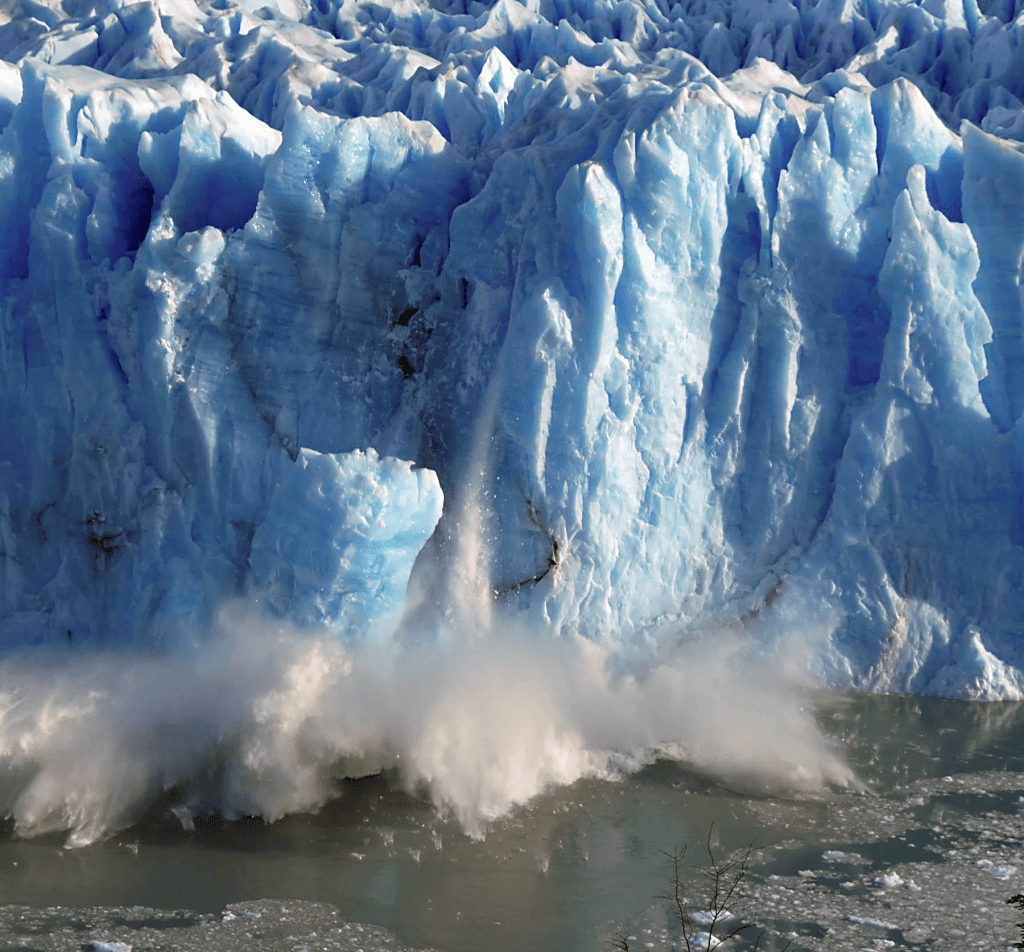
If glaciers keep melting at the current rate, they may not survive this century.
Glaciers represent about 70% of the earth’s freshwater. They also provide fresh drinking water especially in regions with water scarcity. In addition, they sustain river flow downstream and are crucial for generating hydroelectric power.
Last week, on March 21, 2025, the UN officially announced the world’s first World Glacier Day amid melting rates being the highest they have been on record.
According to the UN, it is estimated that from 1975, we have lost 9,000 billion tonnes of ice on average. That is the same as the size of Germany if the ice had a thickness of 25 meters, or 82 feet which the standard length of a swimming pool. Germany is 138,067 square miles equivalent
Glacier melting has a massive impact on sea level rise: 5% of melting causes 21% rise in sea level. 2022-2024 had seen the largest three-year ice mass loss on record. This is a call to action that our glaciers are melting at an alarming rate, and we must reduce our emissions to avoid escalating the effects
Cover image credit: Al Jazeera



 The EcoBlog
Leave a comment