
A mass bleaching event is currently ongoing impacting 83.7% of our coral reefs as they lose color and become increasingly vulnerable.
We are currently in 4th mass bleaching event that started in Jan 1, 2023, about 2 years and 4 months.
Coral bleaching is caused by ocean warming. A whopping 91% of the excess heat coming from our atmosphere is absorbed by the oceans. In addition, oceans also take in 1/3 of our carbon emissions making it the largest carbon sink on the planet. Oceans are a vital part of regulating climate change, but they are being overwhelmed. As atmospheric CO2 levels rise, the ocean’s ability to absorb more CO2 lowers because of increasing ocean temperature, acidity (reduced alkalinity), and salinity. Greenhouse gas emissions have led to mass bleaching events, disruption in the food web, and different migration patterns. In other words, climate change is disrupting the food chain (not just in oceans though). As oceans take in C02, they become acidic making it harder for corals, shellfish, etc. to maintain and develop their skeletons. As the ocean warms, animals also seek cooler habitats and area which can lead to food shortages in one area destabilizing the balance in the ocean ecosystem.
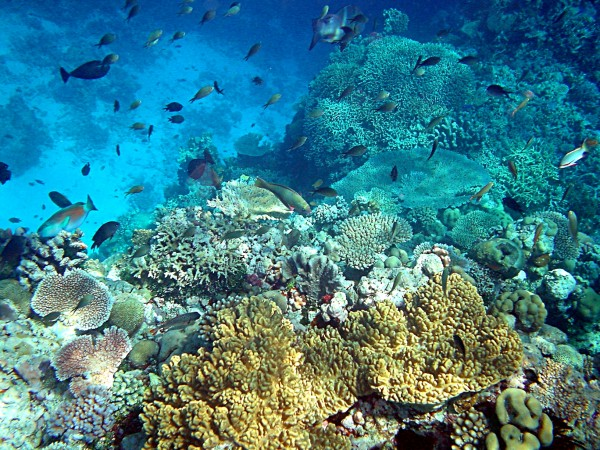
Moving forward, ocean warming stresses corals in what is called heat stress in which they release their symbiotic algae called zooxanthellae. As a result, since it (zooxanthellae) is the symbiotic algae, one they rely on for color, they get bleached making them vulnerable to starvation and disease, although they can make a full recovery. Coral reefs are important for a wide variety of reasons. First, they act as a natural barrier and as a shelter to over 4000 fish species. That’s just fish, and they are often called, “rainforests of the sea” as they support 25%, or 1/4 of all marine life.
Published on 4/29/2025





 The EcoBlog
Leave a comment